
Introduction
A noisy water pump pulley is rarely “just noise.” On a belt-driven engine, the pulley transfers every watt of accessory load to the pump shaft. When it wears, misaligns or loosens, it stresses the pump bearing, chews the serpentine belt, and can take the whole cooling system offline. For distributors and buyers, the pulley is a high-margin attachment SKU and an early-warning indicator worth knowing.
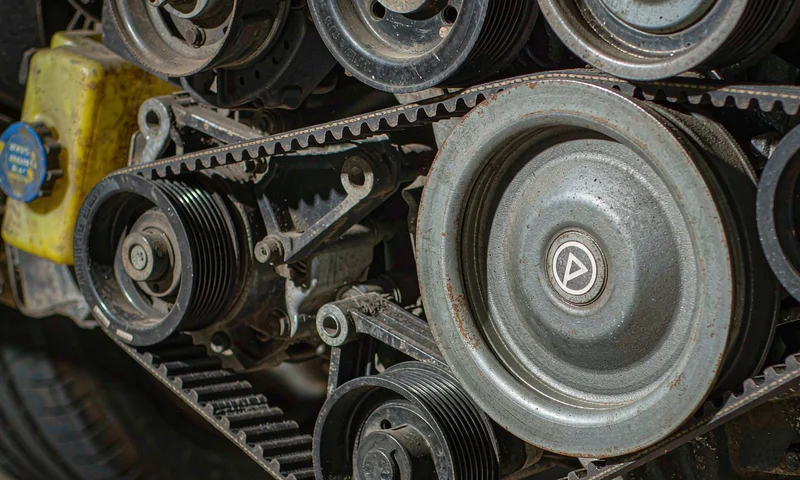
This guide covers causes, symptoms and the replace-vs-repair decision, based on KOME’s field experience across 500+ replacement water pump applications.
What the water pump pulley does
The pulley is the stamped or machined disc bolted to the pump flange. The serpentine belt rides on it and spins the impeller. It looks simple, but it must stay true (no run-out) and torque-secure, because the pump bearing is only happy when the load is centered and steady.
Common causes of water pump pulley noise
- Bearing wear in the pump. A failing pump bearing lets the shaft wobble, so the pulley wobbles too—this is the most common root cause, not the pulley itself.
- Misalignment. A bent flange or wrongly shimmed bracket throws the belt off-plane and screams.
- Belt tension. Too tight overloads the bearing; too loose slips and chatters.
- Loose bolts. The pulley bolts back out under heat cycles and rattle.
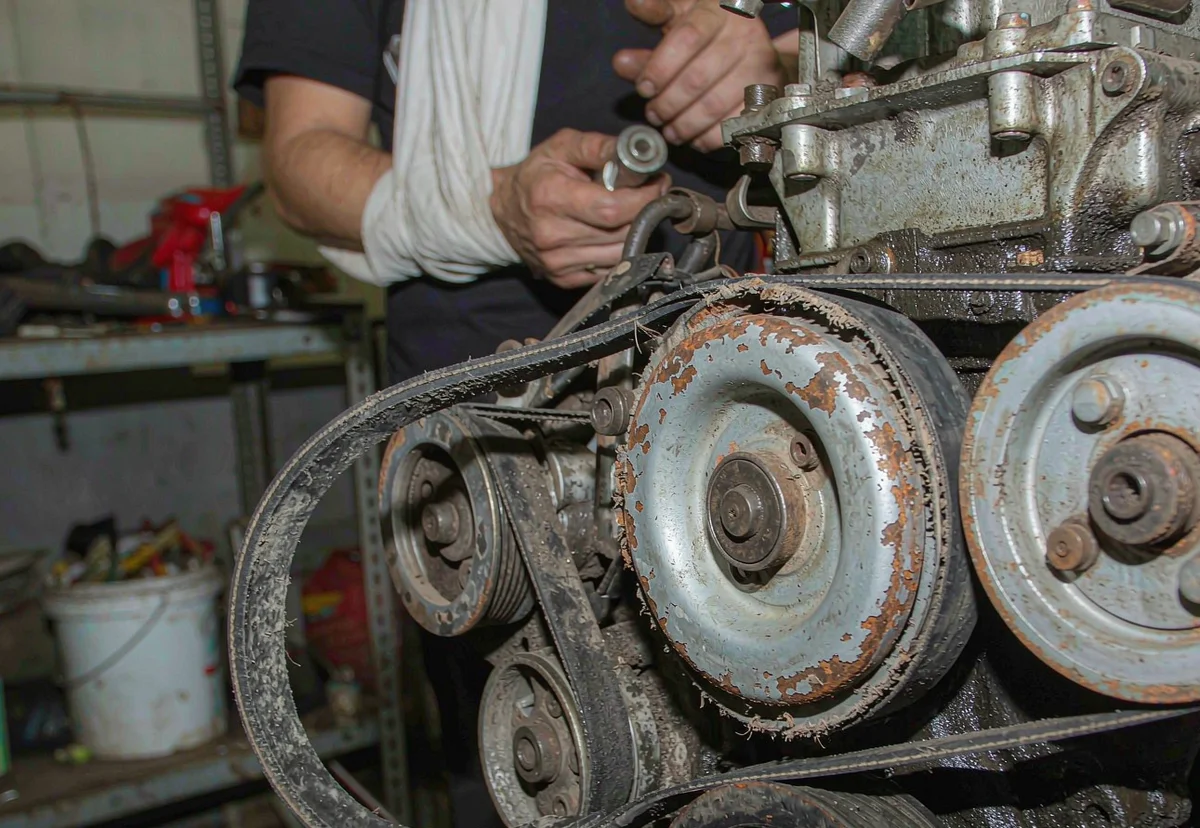
Symptoms to watch
- Squeal or whine that changes with RPM—classic belt or bearing noise.
- Visible wobble of the pulley edge when running.
- Uneven belt wear on one rib side.
- Overheating once the belt slips enough to slow the pump.
Our article on water pump noise causes (whine, grind, squeal) helps separate pump-noise from belt-noise before you sell the wrong part.
Pulley vs whole-pump replacement
Deciding what to sell depends on the root cause:
| Symptom | Sell |
| Loose bolts, no shaft play | Pulley + new bolts |
| Wobble + shaft play / weep | Full water pump assembly |
| Belt wear only | Belt + tensioner check |
B2B spec guidance
When you stock pulley SKUs, match them to the pump they serve—diameter, bolt pattern and flange offset must be exact, or you create the misalignment problem you are trying to fix. Keep a new water pump for car cross-reference handy so the counter can offer the pulley and the pump together. See the water pump diagram for how the pulley sits in the assembly.
Stock pulleys and matched water pump assemblies
KOME supplies water pumps and the correct pulley/bolt kits per application, with torque specs and OEM cross-references so your counter sells the right pair the first time.
Frequently asked questions
What causes water pump pulley noise?
Usually a failing pump bearing that lets the shaft—and thus the pulley—wobble, plus misalignment, wrong belt tension or loose bolts. The pulley is often the symptom, not the cause.
What are the symptoms of a failing water pump pulley?
RPM-dependent squeal or whine, visible pulley wobble, one-sided belt wear, and eventually overheating as the belt slips. Catching wobble early prevents a roadside failure.
Can a bad pulley damage the water pump?
Yes. Misalignment and overload from a bad pulley stress the pump bearing and shorten its life. Replacing the pulley alone will not help if the bearing is already damaged.
Should I replace the pulley or the whole water pump?
If there is shaft play or a weep-hole leak, replace the full assembly. If only the bolts are loose and the shaft is true, a pulley and bolt kit is enough. Match diameter and bolt pattern exactly.
How do I diagnose pulley noise vs water pump noise?
Spin the pump by hand with the belt off: any roughness or play is the bearing/pump. A clean-spinning pulley that screams only under load points to belt tension or alignment. Our noise causes guide gives the full checklist.
Related resources
- Auto water pump diagram: a complete guide
- 9 signs your car needs a new water pump
- How to fix new water pump noise (whine, grind, squeal)
- How to replace your automotive water pump efficiently
Written by the KOME technical team. KOME is a B2B supplier of 500+ OEM-cross-referenced auto water pump SKUs for global distributors.