
Introduction
When a distributor compares water pump quotes, the number on the page hides the real story: how the pump was made. Two pumps that look identical on a shelf can differ by years of service life based on the housing alloy, the bearing grade and the leak test behind them. This factory-level guide explains the automotive water pump manufacturing process so buyers can judge capability before they commit volume.
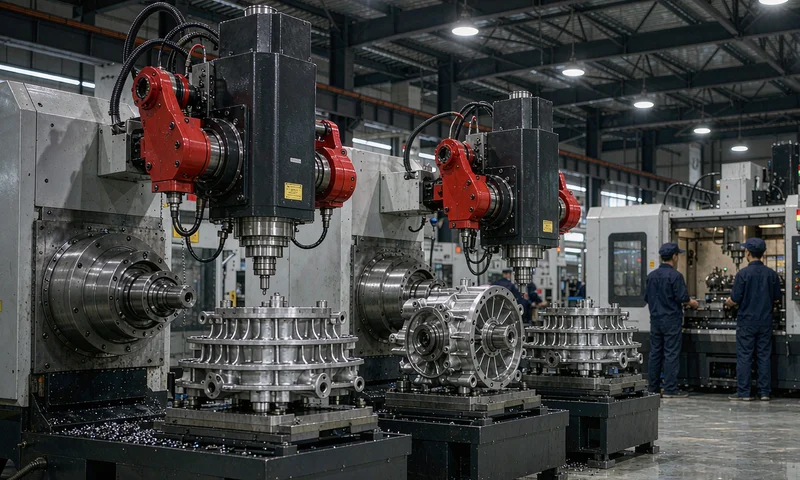
It reflects KOME’s own production line, where 500+ SKUs are built against OEM cross-references to AISIN, GATES and HEPU.
The water pump manufacturing process
A typical mechanical pump moves through eight stations:
- Die casting. The housing is cast in aluminium (or iron for heavy-duty) and trimmed.
- CNC machining. The mounting face, seal bore and impeller seat are machined to micron tolerance—this is where leakage and fit are won or lost.
- Bearing press-fit. The shaft and bearing are pressed to a defined force; under- or over-press damages the bearing instantly.
- Seal assembly. The mechanical seal is seated with controlled lubrication.
- Impeller fitting. The impeller (often moulded or welded) is set to the shaft.
- Sub-assembly. Housing, backing plate and pulley flange are torqued.
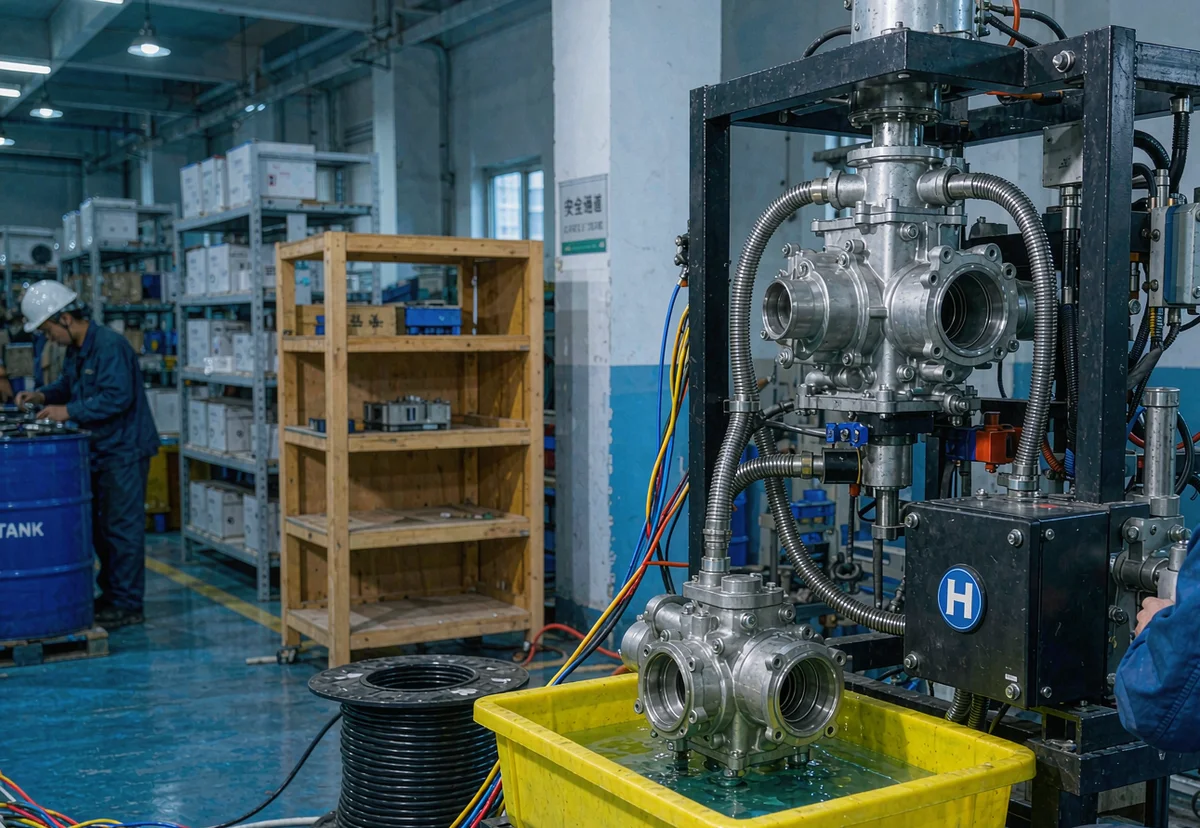
- Leak & pressure test. Every unit is spun and pressurised—see the test rig below.
- Balance & pack. Dynamic balance, then labelled with the OEM cross-reference.
How factory cost maps to quality
Cost is not a single lever; it is spread across the build:
| Cost area | What a cheaper build cuts | What you lose |
| Housing alloy | Recycled / thin-wall | Porosity, leaks |
| Bearing grade | Commercial grade | Early noise, seizure |
| QC depth | Spot-check only | Higher return rate |
The takeaway for buyers: a 5% price gap can hide a 30% life gap. Specification sheets should name the alloy, bearing brand and test coverage. Our aluminium vs cast-iron housing comparison explains the material trade-off.
Quality control checks a pump must pass
- Pressure leak test at the seal and gasket faces.
- Dimension check on the seal bore and mounting pattern.
- Metallurgy check on the housing for porosity.
- Life test on a sample batch for bearing and seal endurance.
KOME runs these per batch and documents them for distributor QA files. See OEM vs aftermarket water pumps for why the build standard, not the label, decides life.
Why source direct from a manufacturer
Buying through a manufacturer rather than a trader gives you traceability, faster engineering response, and cross-reference accuracy. KOME’s manufacturing capability and new water pump for car range are built for distributors who need consistent batches and OEM-matched fitment. For context on the supplier landscape, read our top water pump manufacturers in China overview.
Book a factory tour or request an OEM/ODM quote
See the CNC line, leak-test rig and batch QC for yourself. KOME supports OEM cross-reference, private-label and ODM programs for global distributors.
Frequently asked questions
What is the manufacturing process of an automotive water pump?
Die casting, CNC machining of the seal bore and face, bearing press-fit, seal and impeller assembly, sub-assembly, then leak/pressure and balance testing. Fit and leak are decided at the CNC and press-fit stations.
How does factory cost affect water pump quality?
Cost is distributed across alloy, bearing grade and QC depth. A small price gap can hide a large life gap—cheaper builds cut the housing alloy, bearing brand or test coverage, raising the return rate.
What quality control checks should a water pump pass?
Pressure leak test at seal and gasket faces, dimensional check of the seal bore and mounting, housing metallurgy check, and batch life testing of the bearing and seal. Demand the reports from your supplier.
Why source water pumps directly from a manufacturer?
Direct sourcing gives traceability, faster engineering response and accurate OEM cross-references, plus private-label/ODM flexibility that traders cannot match. It also shortens the QA loop on returns.
What materials are used in water pump housings?
Aluminium for most passenger cars (lighter, corrosion-resistant) and cast iron for heavy-duty diesel. The choice affects weight, heat transfer and cost—see our aluminium vs cast-iron comparison.
How do I verify a water pump manufacturer’s capability?
Ask for IATF 16949, sample batch QC reports, the bearing brand used, and OEM cross-reference accuracy. A factory tour and a small trial order reveal more than a price sheet ever will.
Related resources
- Top 12 auto water pump manufacturers in China
- B2B sourcing guide: evaluating water pump manufacturers
- OEM vs aftermarket car water pump
- Aluminium vs cast iron water pump housing
Written by the KOME technical team. KOME is a B2B manufacturer and supplier of 500+ OEM-cross-referenced auto water pump SKUs for global distributors.